Showing posts with label eggs. Show all posts

Tuesday, 19 August 2014

Chocolate and cinammon cake

I was at loss at what to make for my granddad's birthday, after all you only turn 78 once! Having seen a stack of chocolate, lonely in the cupboard, I decided to put it to use. Originally I intended to make a large chocolate cake by itself, but I didn't think it would be enough, and so the cinnamon cake was born... If you were to close your eyes whilst eating the cinnamon cake, it would taste like a light cinnamon bun, but with crumbs. The cinnamon cake provides a contrast to the chocolate cake in that it has a less rich flavour. The espresso in the cake adds another dimension of bitterness so the cake is not overly sweet, whilst the salt brings out the flavour of the chocolate. The pepper adds a little bite to the sugary goodness. Whilst the white chocolate buttercream is sweet, the ganache is slightly bitter, and so the sugariness is not too much...Whilst they make the cake look quite dramatic, the nuts add another dimension to the cake in that they give more texture, more of a bite.


Cinnamon cake:
150g self-raising flour
100 caster sugar
50g brown sugar
two teaspoons of ground cinnamon
one teaspoon of bicarbonate of soda
150g unsalted butter, softened
a dash of milk
3 eggs

Preheat the oven to 180C.
Cream the butter and sugars.
Add the flour, bicarbonate of soda and cinnamon to the mixture, and fold in.
Whisk the eggs, then add to the mixture along with the milk.
Mix together until you have a smooth batter, and pour into a buttered baking tin.
Bake in the oven for 30 minutes, or until a few crumbs comes out of the cake when it is skewered with a fork.
Take out of the oven and leave to cool in the tin for five minutes, before turning out onto a wired rack.


Chocolate cake:
200g self-rasing flour
180g caster sugar
one teaspoon of bicarbonate of soda
150g unsalted butter, softened
a drizzle of olive oil
two teaspoons of coffee granules dissolved in 30ml of boiling water
two heaped teaspoons of cocoa powder
120g dark chocolate, melted
2 eggs
a teaspoon of sea salt
lots of freshly ground pepper

Preheat the oven to 180C.
Cream the butter and sugar.
Add the flour, bicarbonate of soda, salt, pepper. and cocoa powder to the mixture, and fold in.
Whisk the eggs, then stir into the mixture.
Once the espresso mixture has cooled down, add to the cake batter. If you add it whilst it is too hot, it will start to cook the eggs.
When the melted chocolate has cooled, fold into the mixture, along with the olive oil.
Bake in the oven for 45 minutes, or until a few crumbs comes out of the cake when it is skewered with a fork.
Take out of the oven and leave to cool in the tin for five minutes, before turning out onto a wired rack.


Dark chocolate ganache:
50ml whipping cream
80g dark chocolate, broken in pieces

In a small saucepan, heat the cream.
As soon as the cream starts to bubble, take off the heat.
Stir the chocolate into the cream, so it is fully combined.
Set aside to cool before using.


White chocolate buttercream:
150g unsalted butter, softened
180g icing sugar, sieved
150g white chocolate, melted
dash of milk

Cream together the butter and the sugar.
When you have a smooth mixture, pour in the white chocolate. Make sure the chocolate is not too hot, or the butter will melt, giving a runny icing.
If the icing is too thick, add a few drops of melt to thin it.


Toppings:
Chopped pistachios
Chopped caramelised hazelnuts


Assembling:
If the cakes are too high or too sunken in the middle, trim with a serrated knife, so that you have a flat surface. Make sure that the cakes are cool when you cut them, otherwise they will crumble, and will the trimming will not be as neat.
Spread your base cake with the chocolate ganache near to the edges. Don't spread right to the edges, or when you put the other cake not top, the filling will spill over the sides. I put the chocolate cake on the bottom because it was bigger.
Put the smaller cake on top of the ganache and press down firmly.
Using a palette knife, (preferably a straight one,) spread the buttercream over the top and sides of the cake. I find that working from the top down is easiest. The buttercream should be thick enough that it can hold the nuts, but not so thick that it is too much to eat in a slice...however much that may be!
Firmly press the hazelnuts onto the side of the cake so that they stick. Using a palette knife to press them in may help.
Spread the pistachios on the top of the cake, but much more sparsely than the hazelnuts were put onto the cake. 

Wednesday, 6 August 2014

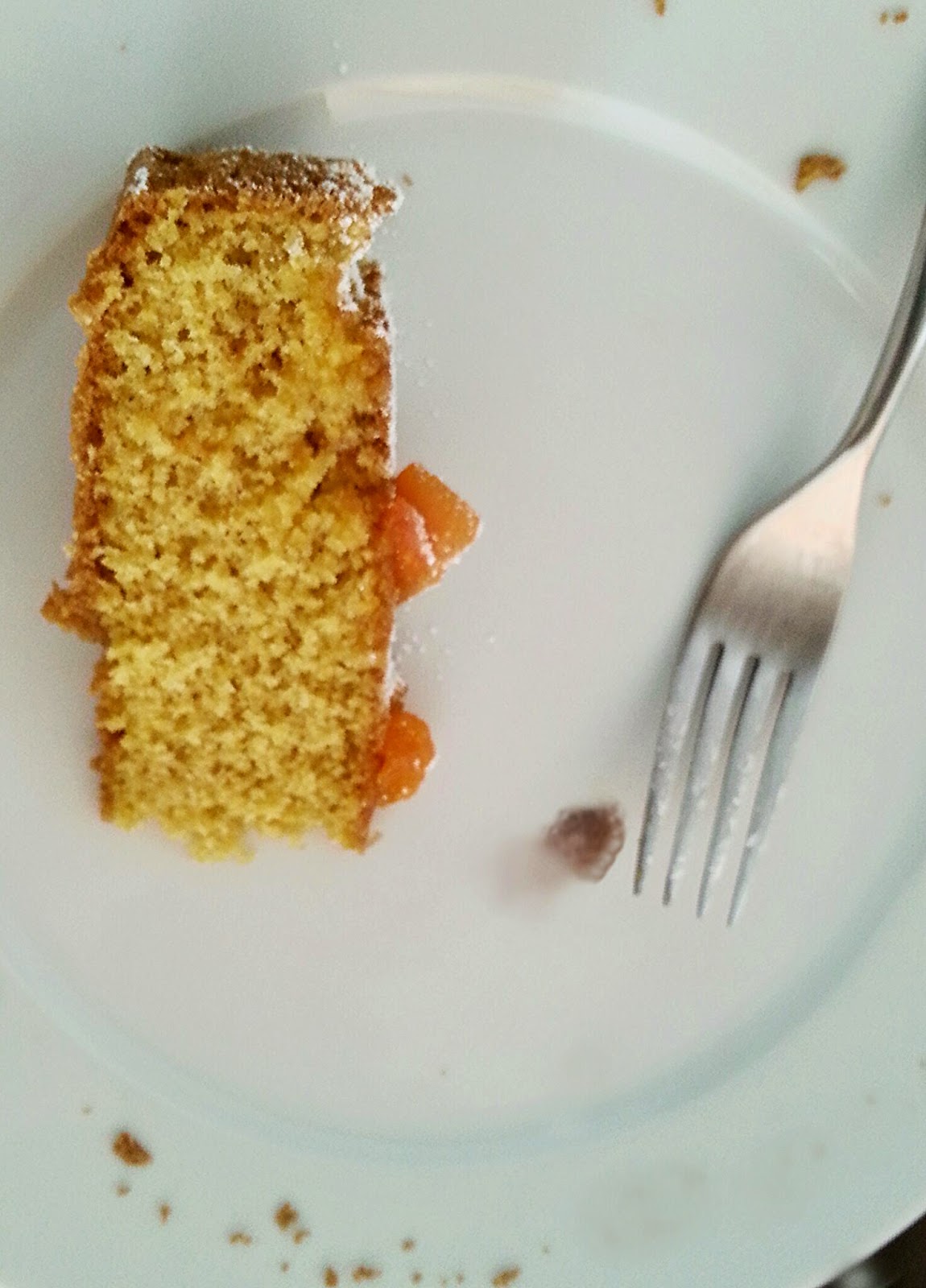
Lemon polenta cake

Polenta is one of the nicest grains for a cake, in that it provides a light yet firm crumb. Popular in Italian cuisine, polenta comes from corn.  


4 eggs, separated
250g caster sugar
80ml olive oil
120g polenta
200g plain flour/ground almonds
zest of two lemons

apricots, diced
icing sugar
juice of two lemons


Preheat the oven to 220C, and line the base of a cake tin with baking parchment.
Beat the egg whites until soft peaks are formed, then add the caster sugar whilst continuing to whisk.
Fold in the polenta, ground almonds and lemon zest.
Pour in the olive oil, whilst continuing to fold.
Put into the oven, and after 20 minutes turn the temperature down to 190C.
The cake should take around 40 minutes in total to cook, but depending on your oven, it is ready when the top is hard, and crumbs come out when a fork is put into the cake.
When the cake comes out of the oven, it is time to make the syrup topping.

In a small saucepan, heat the apricots until they start to soften. 
Add the lemon juice and the icing sugar, gently stirring to dissolve it.
When all the liquid has combined, pierce the top of the cake with a fork.
Drizzle the syrup over the cake - the pierced top means that the syrup is fully absorbed into the sponge.
Serve warm with soured cream.

Sunday, 2 March 2014

Banana pancakes

Pancake day is brilliant. It's that time of year where you can stuff your face yet claim it's because you are following religious practices. Like Christmas. And Easter.

There are so many types of pancakes available: fluffy American pancakes, crepes, blinis, buckwheat pancakes... Buckwheat and I have never got on too well.

The first time I tried buckwheat was when my mother was looking for an alternative to rice and potatoes and bread. The result was that I chucked it into next door's garden (I was a rebellious youth \m/).

The next time I encountered buckwheat was in the form of soba. It was probably just the way I (over)cooked the Japanese noodles so that they were glutinous and sticky, but they didn't agree with me particularly well either.

Next was in the form of bread. Using a Kenwood bread machine booklet, I got used the recipe for a plain white loaf and used buckwheat flour instead. The only thing I can say about this is DO NOT TRY THIS AT HOME!

Finally I came across buckwheat pancakes. The problem with buckwheat is often that it is too heavy, and weighs down whatever is being made with it. However in pancakes, if you beat whipped egg white into the mixture, you can have light and fluffy pancakes, or, if you make a mixture with solely the flour and milk, you can have a delicate crepe, like they serve out of foodtrucks in markets around Lille.

However this Pancake Day, I wanted to make a pancake which did not involve flour. Potato would be too heavy, carrot too watery, but banana... banana had the right substance for a thick pancake which could settle in the pan without clogging up your throat when you ate it. For these pancakes though, you cannot have overripe bananas, as they will not solidify enough.

You will need:
two bananas, pureed
one egg
a dash of milk

Mix all the ingredients together and fry over a medium heat in a lightly oiled pan.
Serve with butter, bananas and syrup - it can't be too healthy!


Other variations of pancakes I have seen but have yet to imitate include the ricotta pancakes served at The Hoxton Grill in Shoreditch (EC2A).

Sunday, 1 December 2013

Chocolate and chestnut cake

This is quite a bitter cake, perfect for an after dinner treat. It has quite a moussey texture thanks to the folded egg whites

INGREDIENTS
400g whole cooked chestnuts
250g dark chocolate
150g unsalted butter
2 eggs, separated

100g dark chocolate
one orange - zest and juice
icing sugar, to taste
double cream, to taste


It's nearly Christmas already?!
CAKE
Pulse the chestnuts until you have a fine crumb.
Melt the chocolate over a ban marie, and add the butter.


Melted chocolate.
Once melted, leave the chocolate/butter mixture to cool.
Beat the egg yolks with the sugar and add to the chocolate/butter liquid.
Whisk the egg whites.
Combine the chestnuts with your chocolate mixture, and beat in two tablespoons of the egg whites.
Gently fold the mixture into the rest of the egg whites.


The mixture.
Pour into two lined cake tins and leave to bake for half an hour.
The finished product should have a crumb when a skewer is inserted.


ICING
Melt the chocolate and add orange zest as well as the juice of an orange. I used clementines as I didn't have any oranges, but their flavour was not intense enough to cut through the orange.
Add icing sugar to taste. The cake is bitter, as is dark chocolate, so you need some sweetness!
Add double cream to thin the mixture, and dilute the intensity of the bitterness.

Spread onto the cake.

Serve a slice of cake with crème fraîche.

Tuesday, 26 November 2013

Banana and salted caramel cake

Yes banana is healthy, but when combined with copious amounts of butter, sugar and cream, the benefits are most probably cancelled out...

100g soft brown sugar
50g soft brown sugar
150g unsalted butter
250g plain flour
one teaspoon of cinnamon
half a teaspoon of ground ginger (optional)
half a teaspoon of nutmeg (optional)
one and a half teaspoons of baking powder
two eggs, beaten
one vanilla pod
three bananas, mashed
50 ml milk
a dash of orange juice

equal weights of butter and soft brown sugar (I used 100g of each and still had enough to fill a jar size 190g)
coarse sea salt - to taste
double cream

Preheat the oven to 200C and line two 18-20cm cake tins.

Lined tins.

Cream together the butter and sugar.
Deseed the vanilla pod, and add to the butter and sugar.
Gradually beat in the eggs to the butter and sugar - if you do it too quickly, the mixture will curdle and separate.
Add half of the dry ingredients to the mixture and whisk.
Then add all of the milk and orange juice, and whisk.
Once thoroughly combined, add the rest of the dry ingredients.
Add the mashed bananas to the mix and stir together.
Pour into the tins and cook for 30 - 40 minutes.

Cake.

 
Salted caramel sauce.
 

Melt the sugar and butter in a sauce pan over a medium heat.
As soon as they have both fully melted, take off the heat.
Then add the salt and cream, and stir.
Leave aside to cool and thicken.
When lukewarm, drizzle onto the cake.

I topped the cake with extra pieces of cake.


For texture, you could add toasted walnuts to the mixture.
 

Tuesday, 20 August 2013

Baked chocolate mousse

BAKED CHOCOLATE MOUSSE300g dark chocolate (at least 70% cocoa)
150g unsalted butter
6 eggs, separated
60g icing sugar
Sea salt

 
Use sifted icing sugar and a template to create a pattern of your choice. We used a (clean) fly swat, although it looks a little like a wine glass...

Preheat the oven to 180C.
Melt together the chocolate and butter in a bain marie, then add sea salt to taste. I used 5 grinds.
Beat the egg yolks and half of the sugar for one minute, then add to the chocolate/butter mixture.
Whisk the egg whites until you get soft peaks, then gradually add the rest of the sugar until you get stiff peaks.
Fold a third of the egg whites into the chocolate mixture, and then pour the mixture back into the egg whites. Don't pour from a height, because you'll lose the air you managed to trap.
Pour into your tin, and cook for 20 minutes (or a little less for a fondant type filling).

Serve with ice cream or white chocolate mousse, and a glass of nicely chilled Rivesalte wine.


Adapted from James Martin's Desserts

Tuesday, 6 August 2013

Gooey and indulgent chocolate cake

CHOCOLATE CAKE
250g dark chocolate (use milk chocolate for a fudgier taste)
250g unsalted butter
200g sugar - I used a mixture of soft brown sugar, caster sugar, and muscovado sugar
50g cocoa powder
4 eggs, separated

sea salt (optional)

Preheat the oven to 160C, and line a tray/tin with salted butter.
Melt the chocolate and butter in a bain marie, then set aside.
Beat the egg yolks, sugar and cocoa powder until thoroughly combined.
Add the mixture to the chocolate/butter mixture.
Whisk the egg whites until you get stiff peaks, then fold into the other mixture.
Pour into the tray/tin.
If you're adding the salt, sprinkle a little over the top.
Pop into the oven for 30 minutes - or until a fork comes out clean.
When cooked, leave in the tin for 5 minutes (to hold its shape), then turn out onto a wire rack to cool.
Serve with chantilly.

Thursday, 25 April 2013

Toasted walnut and gruyère biscotti

Toasted walnut and gruyère biscotti 
BISCOTTI150g plain flour
half a teaspoon of baking powder
pepper
dash of salt (because cheese provides a lot of saltiness)
2 small/medium eggs, beaten
70g whole walnuts
70g gruyère cheese, grated
a teaspoon of worcestershire sauce

Preheat the oven to 200C, and turn a pan onto medium heat.
In the pan, toast the walnuts for about 5 minutes, but be careful not to burn them! Constantly move them.
Mix together the flour, baking powder, salt, pepper and worcestershire sauce.
Then add the eggs, mixing with the fork until you get a good dough. You don't want the mixture to be wet, so add more flour if it needs it.
Roughly chop the walnuts into smaller chunks (discarding any burnt bits), and add to the dough.
Also add the cheese to the dough and combine by hand. Or do it all by food processor. But cooking like this is healthy! It's exercise! Cans of beans for weights, whisking egg whites for toning, and kneading for stamina. It's cheaper than a gym membership too!

Toasted walnut and gruyère biscotti
Divide the dough into two and shape into rolls.
Press down on the rolls so that you have fat, flat, long rolls (approx, and I mean approx 1.5cm x 5cm x 15cm)
Put them on a baking tray lined with baking paper, and 2 minutes before you put them in the oven, turn the oven down to 180C.
Leave to cook in the oven for 20-25 minutes.
When you take the biscotti out, cut it diagonally (it looks nice) with a serrated knife.
Put these slices back into the oven on the slightly lower temperature of 170C to cook for a further fifteen minutes. You want to dry the biscotti out a bit.

Serve with a nut dip, or a soup.
I would personally serve with a fresh chunky yet smooth blend of cashews and salted/honey roasted peanuts (blitz them together in a food processor) or guacamole, or French onion soup.


Peanut dip
You could:
add diced black olives/ serve with a tapenade
use sundried tomatoes instead of walnuts
use parmigiano reggiano
make a 'quattro formaggi' biscotti with 4 different cheeses

Monday, 22 April 2013

Pineapple Upside Down Cake

To be honest, there aren't many things you can do with an overripe pineapple. So I was thinking, why not do something using the excess sweetness and slight alcohol tint to complement something which is perfectly nice on its own, but could do with a bit of spicing up.
It's paramount to have fluffy egg whites, because juice from the pineapple drips into the cake (like a tarte tatin) making it a bit wet, and therefore making an otherwise light dessert, dense.
 
Pineapple Upside Down Cake
 
Serves 6

PINEAPPLE CAKE
1 small pineapple, cut into chunks
3 eggs separated
150g slightly salted butter, softened
150g caster sugar
150g plain flour (you can add baking powder for an extra lift)
a few spoonfuls of muscovado sugar
 
caster sugar to water in the units of 1:3 (respectively)
a teaspoon of chilli flakes

Pineapple Upside Down Cake
 
Preheat your oven to 200C and grease a cake tin.
Beat together the egg yolks and sugar until you get a smooth, creamy consistency.
Stir in the flour until you get a sort of wet crumble-looking mixture. Yes it should look like that.
Beat in the softened butter until you have a more typical cake mixture.
Then, whisk the egg whites until they're stiff like meringues.
When you add the egg whites to the rest of the mixture, don't add it from a height or you'll lose some of the air.
Stir the mixtures together until fully combined and you have a fluffy mixture. Yum.
Turn the oven down to 180C as you're nearly to put the cake in.
Put the pineapple in the cake tin, neat and evenly spaced, or dropped in (authentic).
Evenly sprinkle muscovado (or another dark brown sugar, maybe treacle) over the pineapple. This creates a kind of caramel, nuttifying the pineapple.
Completely cover the pineapple with cake mixture, and put in the oven for 40 minutes or until a fork comes out of the cake with a few crumbs. Check the cake at 35 minutes though.
When cooked, turn the cake out and leave to cool- if you leave it in the tin, it continues cooking, drying the cake out.
 
Over a medium heat, bring caster sugar and cold water to the boil in a saucepan.
Then turn the heat down, add the chilli flakes, and continuously stir until ALL of the sugar is dissolved.
Strain the syrup and leave to cool to remember.
The longer you boil the syrup, the thicker it will be.
Syrup keeps for one month in a sealed container.
 
Serve a slice of cake with a drizzle of chilli.

Pineapple Upside Down Cake
In the syrup I used chilli flakes instead of fresh chilli because I didn't want too strong a flavour.

Sunday, 21 April 2013

Banana and coconut ice cream

This recipe is so delicious and simple that you could have it as a milkshake instead (minus the coconut)!

ICE CREAM6 spotted bananas - the overrripeness gives lots of sweetness so you don't have to add too much sugar
600ml double cream
2 tablespoons light brown sugar
3 egg yolks
150g desiccated coconut

Beat the sugar and egg yolks together until fully combined.
In a small saucepan, gently heat the cream on medium heat.
When the cream starts to bubble, take it off the heat and pour into the egg/sugar mixture slowly, whisking at the same time. Never pour the egg mixture into the pan as the direct heat will cook the eggs, giving sweet scrambled eggs but not custard.
In a separate bowl, mash the bananas until you get a smooth purée.
Add the bananas to the custard, mix together, and strain through a sieve into your ice-cream maker.
Add the coconut and leave to churn.
If you don't have an ice cream maker, stir the coconut into the banana custard and leave in a tub to freeze. After an hour, stir it up so you get a smooth mixture, not one with ice in.

Notes
You could use chocolate or toffee instead of coconut, or tequila or pineapple instead of banana. Be careful with freezing alcohol... Alcohol has a much lower freezing point than water, and the higher the proof, the lower the temperature. So by diluting the alcohol or using a lower strength, alcohol should freeze.

An alternative way of making ice cream is the Victorian way of getting a huge bag of ice and some rock salt.
As soon as salt is added to ice, they react (doing something of which i'm not quite sure)
So pour the ice cream mixture into a sealed bag, and put this bag into the bag of ice. When you add the salt to the ice, close the bag up, and shake for anywhere from 5-15 minutes until the ice cream sets.

Sunday, 3 March 2013

Dishoom WC2

Nestled in Upper Saint Martin's Lane with another restaurant over in Shoreditch, Dishoom have clearly got a good location(s), so this is why I was a little surprised to find a lack of people at 10.30 on a Sunday morning.

Friendly staff and a Byron meets Pain quotidien meets Bombay setting automatically created a good yet laidback atmosphere to relax in over a chai or lassi. Service was very quick so unfortunately for us (but fortunately for them)it wasn't the ideal place to linger and read a newspaper. A strong incense permeated the downstairs which had a few large and cosy alcoves.

I ordered an egg naan roll which was a very reasonable £3.50! Chewy and herby naan- which you could see being made- was stuffed with fried eggs, complete with runny yolks, a scattering of spring onions and a serving of chilli jam. The chilli jam was not spicy but quite sweet, all the while complementary.


A had a "Full Bombay", complete with akuri (a type of spicy scrambled eggs), bacon, eggs, tomatoes, and grilled bread. The akuri was pretty good, as it tasted like the way my granddad makes it. But. But, but, but... the sausages were tiny, the grilled tomatoes were basically raw, and the bacon was a bit of the disappointment. Despite this, it was £7.90, and you wouldn't get this kind of quality round here at that price...


To drink I had a breakfast lassi (£3.50). Made of banana, yoghurt, oats and mango, this drink was smooth, creamy and everything it should be. A had an Assam tea (£2.20), which was well-stewed but not enough water for such a large teapot.

It's not really relevant, but in the bathroom, there was a display cabinet of medicines, soaps, and other toiletries, which only added to the Indian-inspired atmosphere.

The breakfast menu is available from 8-11 on weekdays, and 10-1 on weekends. Have 8 breakfasts and get another one free!

Thursday, 14 February 2013

Pancakes

What is the difference between a pancake and a crêpe?
Crêpes are made from a thin batter and are light, whereas pancakes are thicker and fluffier. The size of a pancake is usually around half that of a crêpe.

What is the difference between an American pancake and an English pancake?
American pancakes having a raising agent like baking powder, and often use buttermilk instead of milk. Buttermilk can be made easily by squeezing some lemon into milk 10 minutes before you need to use it, and leaving it to curdle.

American pancakes
150g self-raising flour
a teaspoon of baking powder
125ml milk
one egg - I like to separate and whisk the white to give more lift.
olive oil or a few tablespoons of melted butter
a few teaspoons of demerera sugar depending on whether you're making sweet or savoury pancakes

Sift the dry ingredients together, and then whisk in with the rest of the ingredients.
On a medium heat, melt a blob of salted butter in a pan.
Pour in the liquid and don't touch until the pancake has solidified and begins to bubble. As American pancakes are small, you can make several in the pan at the same time. I tend to make mine between 7 and 14 cm diameter.
Flip the pancake and leave until golden.
Stack high and serve.

Notes/variations
Add blueberries or raspberries into the pancake mixture.
Serve the traditional way with crispy streaky bacon and maple syrup or golden syrup.
Fill with cheese, ham and spinach  and pine nuts, and roll to make a roulade.
Top with an egg or melted gruyere.

Crêpes
200ml milk - I find that full-fat holds a better texture
125g plain flour, sifted
2 eggs - and a bit of eggshell if you're like me!

salted butter

Blend all the ingredients together; this is best done adding the flour a little at a time.
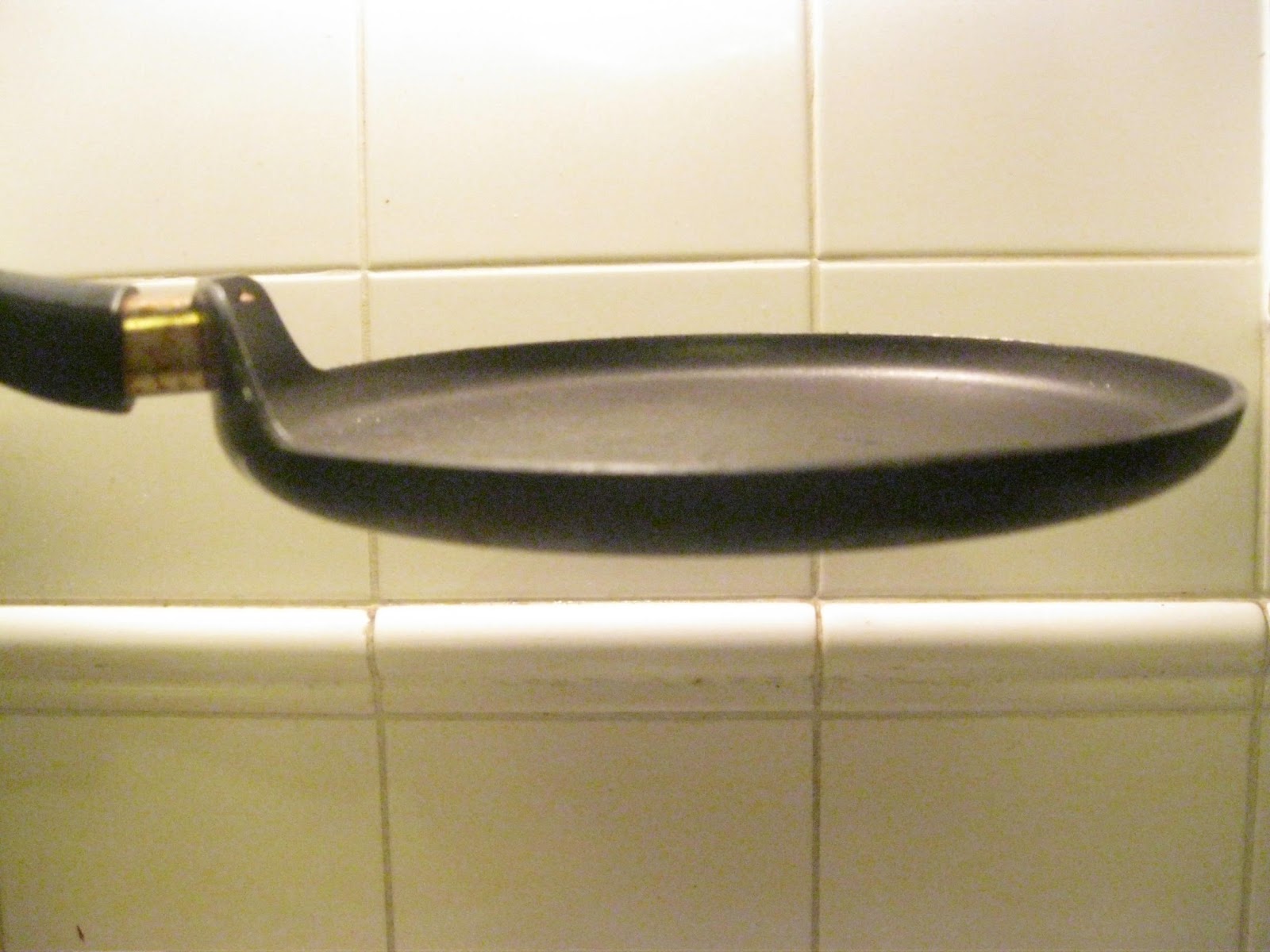
Heat a crêpe pan (basically a normal pan with a thick base and low sides) until it starts steaming.
Turn the pan down to medium heat, and melt butter in the pan, swirling it around.
Pour in some of the mixture and leave until the edges curl and you can see steam. As long as you tilt the pan whilst pouring the mixture in, you will have a thin and evenly spread crêpe.
Flip the crêpe and leave until it turns golden.
As soon as it is ready, take off the heat, put in the filling and roll.

Notes/variations
I used salted butter as brings out the flavour of the crêpe.
Putting sugar in the butter before putting the crêpe mixture in it will give the crêpe a caramelised taste.
When all the crêpes have been made, you could roll them up, put them in a lined baking tray, cover with custard and bake until the custard sets- a bit like a bread and butter pudding.
Alternatively, you could make Crêpes Suzette.


Monday, 21 January 2013

White chocolate macarons and a dark chocolate mousse filling (Macaron mess)


150g ground almonds (very fine)
225g icing sugar, sieved
100g white chocolate- probably about 80g once you've had a bit of it*
3 egg whites - keep the yolks for later
50g caster sugar
dash of salt

150g dark chocolate
20g salted butter
3 egg yolks
a whole egg separated

Mix the ground almonds and icing sugar until thoroughly combined.
In a separate bowl, whisk the egg whites to soft peaks. Add the salt and gradually add the caster sugar whilst whisking on a slow pace.
Fold the almonds and icing sugar into the meringue mixture, and then fold in the melted white chocolate.
Pipe the macarons  onto a baking sheet evenly spaced. If there are peaks on top of them, dab them with a damp finger.
Leave the macarons to rest for 40 minutes, until a skin forms on the top of the macarons.
In a preheated oven of 150C, bake the macarons, and make the mousse filling during the meantime.

Melt the dark chocolate and butter in a bain marie.
Once fully melted, beat the egg yolks into the chocolate and butter.
Whisk the egg white into stiff peaks and completely fold into the rest of the mousse mixture.
Pipe the chocolate mousse onto the cooled macaron halves.

However, if like mine you decided to use all your macaron mixture in one batch... break up the macarons and combine into the mousse getting a macaron mess (instead of Eton Mess - see what I did there?). It tastes the same even if the presentation is questionable.

Variations:
use coffee or dark rum in the mousse
make caramel macarons instead of white chocolate
make a lavender praline filling

*it might just be worth getting 200g on the off chance you eat more than a nibble. Just a thought...

Wednesday, 9 January 2013

Tarte au citron Meyer

Tarte au citron is a classic French tart filled with a tangy lemon custard. I used Meyer lemons which are a cross between a lemon and a mandarin. They are quite sweet in comparison to other lemons, yet still quite tangy.


A nice even bake :-)


175g 00 flour (this flour is very fine, so makes the pastry more crumbly, it's fine to use normal plain flour though too)
140g unsalted butter, diced
30g soft brown sugar
25g icing sugar
zest of one lemon

5 eggs
160ml double cream
the zest and juice of 3 Meyer lemons
100g caster sugar

Sieve the sugar and flour, and mix with the zest of one lemon.
Add the cold butter and rub until you achieve a crumble mixture. As there is a lot of butter in this pastry, it shouldn't need any liquid. If you do add liquid, the consequence is that the pastry will not be as crumbly when cooked.
Wrap the pastry in clingfilm and leave in the fridge for 15 minutes to harden up.

Preheat the oven to 200C and butter a tart case.
Roll the pastry to less than a 1 centimetre thickness, and roll over the tart case.
prick the pastry case and blind bake it in the oven for 20 minutes. Instead of using baking beans, you can use baking paper with a similar sized cake tin on top.
Whilst the cake is cooking, whisk the eggs until they increase in size by about one and a half.
Add the sugar, lemon zest and lemon juice to the eggs, but continue whisking.
When thoroughly combined, pour in the double cream, and whisk again. You can add milk if you want a thinner mixture.
Pour into the tart case and bake for about half an hour, or until the filling is a little wobbly.

Serve cold with a spoonful of clotted cream.


You could
  • decorate with candied lemons
  • spread the base with lemon curd or melted dark chocolate, and cover with the filling mixture
  • use tangerines instead of lemons

Saturday, 29 December 2012

Orange and almond cake


Orange and almond cake


*sizing is not accurate; the orange is definitely not that big


This cake is an easy wheat-free bake, perfect as a light end to a meal.
 
Ingredients:
a large unwaxed orange
125g ground almonds
3 eggs, separated
75g sugar
 
Method:
Preheat the oven to 200C and butter a cake tin.
In a large saucepan on medium heat with a few tablespoons of water, put the orange in, cover, and leave to simmer for about half an hour, or until the orange has softened considerably.
When the orange has softened, dry it and blitz it. Although the pith has a lot of fibre, it can give a slightly bitter taste.
In one bowl whisk the whites of the eggs until you have soft peaks.
In another bowl, beat the yolks and the sugar until the volume of the yolks has doubled.
Add the ground almonds and orange mixture to the sugar/yolk mix until thorougly combined.
Gradually, add the egg whites, but be careful to not knock out the air you have obtained.
Pour into the cake tin from a low height. If you pour it from high, air is lost from the mixture.
Bake for about 40 minutes, or until the top is golden and when the cake is pricked, the fork comes out clean or with a few crumbs.
  
Variations:
Add baking powder for a higher rise in the cake.
As soon as the cake comes out of the oven, juice 4 large oranges. Reduce the juice in the pan till it is slightly more syrupy. Prick the cake with a fork several times, and drizzle the orange reduction over it. When you prick the cake, it absorbs more of the liquid.

Chestnut glazed mousse

Chestnut glazed mousse


Chestnut glazed mousse

Ingredients:
350ml crème fraîche
400ml fromage frais
2 tbsp caster sugar (use icing sugar if you prefer a finer mixture)
a vanilla pod


half a jar of homemade chestnut jam

Method:
Whisk together the crème fraîche, fromage frais, caster sugar, and the seeds from the vanilla pod until you have a smooth mixture.
Generously decant into several pots- small jam jars would look nice.

In a small saucepan, heat the jam over a medium heat. When it has melted, pour it over the creamy mixture. However if your chestnut jam is more of a purée, immediately pour over the creamy mixture.

Variations:
For extra lightness, whisk egg whites and add to the mix.
For a richer mixture, replace some of the crème fraîche and fromage frais for double cream.

Monday, 24 December 2012

Almond Tart with a Spiced Sauce

Possibly one of the crumbliest pastries ever?

Buttery and flakey!

Tart and sauce


It looks a tiny bit like a Crema Catalana...

Ingredients

Pastry
150g plain flour
140g diced unsalted butter
35g caster sugar

Almond Mixture
110g ground almonds
100g caster sugar
3 eggs
70ml double cream
30ml milk

Sauce
3 teaspoons of camp ( a coffee and chicory essence)
1/4 teaspoon of cinammon
1/4 teaspoon nutmeg
2 tablespoons of caster sugar
40ml double cream
20 ml milk

Method
Preheat a fan oven to 200°C, and butter some tins for the tarts- I used Yorkshire pudding tins which are quite flat, but give a very even bake.

Stir the flour and sugar together and rub in the butter until you have a crumble mixture. As this dough is very buttery, it probably won't need any liquid, but if it does, use an egg yolk or a few drops of milk.
Cover the ball of pastry dough in clingfilm, and leave to harden in the fridge.

Whisk together all the ingredients of the almond mixture until it is thoroughly combined and it has increased in volume slightly.

Roll the pastry on a floured surface to a thickness of about 0.75 cm.
Cut the pastry into shapes, place in their tins, and prick the pastry bases a couple of times.
Give the almond mixture another quick whisk in case the ingredients have separated, and pour into the lined tart cases. Pour the mixture to the same height as the pastry, or even a bit higher.
Bake in the oven until the almond mixtures have set and turned a golden colour.
Turn the tarts out onto a wire rack and leave to cool down.

Whilst the tarts are cooling down, mix together the cream, milk and camp.
Add the spices to the liquid and beat.
Pour the mixture into a presentable jug.

Serve the tart warm with the sauce as a dessert, or with a summer fruits compote for breakfast.

Or...
use chestnut flour in the pastry to make the tart even more nutty!
add poached cherries to the almond mixture
swap some of the ground almonds for polenta
add a drop (or two) of rum to the sauce