Showing posts with label milk. Show all posts

Tuesday, 19 August 2014

Chocolate and cinammon cake

I was at loss at what to make for my granddad's birthday, after all you only turn 78 once! Having seen a stack of chocolate, lonely in the cupboard, I decided to put it to use. Originally I intended to make a large chocolate cake by itself, but I didn't think it would be enough, and so the cinnamon cake was born... If you were to close your eyes whilst eating the cinnamon cake, it would taste like a light cinnamon bun, but with crumbs. The cinnamon cake provides a contrast to the chocolate cake in that it has a less rich flavour. The espresso in the cake adds another dimension of bitterness so the cake is not overly sweet, whilst the salt brings out the flavour of the chocolate. The pepper adds a little bite to the sugary goodness. Whilst the white chocolate buttercream is sweet, the ganache is slightly bitter, and so the sugariness is not too much...Whilst they make the cake look quite dramatic, the nuts add another dimension to the cake in that they give more texture, more of a bite.


Cinnamon cake:
150g self-raising flour
100 caster sugar
50g brown sugar
two teaspoons of ground cinnamon
one teaspoon of bicarbonate of soda
150g unsalted butter, softened
a dash of milk
3 eggs

Preheat the oven to 180C.
Cream the butter and sugars.
Add the flour, bicarbonate of soda and cinnamon to the mixture, and fold in.
Whisk the eggs, then add to the mixture along with the milk.
Mix together until you have a smooth batter, and pour into a buttered baking tin.
Bake in the oven for 30 minutes, or until a few crumbs comes out of the cake when it is skewered with a fork.
Take out of the oven and leave to cool in the tin for five minutes, before turning out onto a wired rack.


Chocolate cake:
200g self-rasing flour
180g caster sugar
one teaspoon of bicarbonate of soda
150g unsalted butter, softened
a drizzle of olive oil
two teaspoons of coffee granules dissolved in 30ml of boiling water
two heaped teaspoons of cocoa powder
120g dark chocolate, melted
2 eggs
a teaspoon of sea salt
lots of freshly ground pepper

Preheat the oven to 180C.
Cream the butter and sugar.
Add the flour, bicarbonate of soda, salt, pepper. and cocoa powder to the mixture, and fold in.
Whisk the eggs, then stir into the mixture.
Once the espresso mixture has cooled down, add to the cake batter. If you add it whilst it is too hot, it will start to cook the eggs.
When the melted chocolate has cooled, fold into the mixture, along with the olive oil.
Bake in the oven for 45 minutes, or until a few crumbs comes out of the cake when it is skewered with a fork.
Take out of the oven and leave to cool in the tin for five minutes, before turning out onto a wired rack.


Dark chocolate ganache:
50ml whipping cream
80g dark chocolate, broken in pieces

In a small saucepan, heat the cream.
As soon as the cream starts to bubble, take off the heat.
Stir the chocolate into the cream, so it is fully combined.
Set aside to cool before using.


White chocolate buttercream:
150g unsalted butter, softened
180g icing sugar, sieved
150g white chocolate, melted
dash of milk

Cream together the butter and the sugar.
When you have a smooth mixture, pour in the white chocolate. Make sure the chocolate is not too hot, or the butter will melt, giving a runny icing.
If the icing is too thick, add a few drops of melt to thin it.


Toppings:
Chopped pistachios
Chopped caramelised hazelnuts


Assembling:
If the cakes are too high or too sunken in the middle, trim with a serrated knife, so that you have a flat surface. Make sure that the cakes are cool when you cut them, otherwise they will crumble, and will the trimming will not be as neat.
Spread your base cake with the chocolate ganache near to the edges. Don't spread right to the edges, or when you put the other cake not top, the filling will spill over the sides. I put the chocolate cake on the bottom because it was bigger.
Put the smaller cake on top of the ganache and press down firmly.
Using a palette knife, (preferably a straight one,) spread the buttercream over the top and sides of the cake. I find that working from the top down is easiest. The buttercream should be thick enough that it can hold the nuts, but not so thick that it is too much to eat in a slice...however much that may be!
Firmly press the hazelnuts onto the side of the cake so that they stick. Using a palette knife to press them in may help.
Spread the pistachios on the top of the cake, but much more sparsely than the hazelnuts were put onto the cake. 

Sunday, 2 March 2014

Banana pancakes

Pancake day is brilliant. It's that time of year where you can stuff your face yet claim it's because you are following religious practices. Like Christmas. And Easter.

There are so many types of pancakes available: fluffy American pancakes, crepes, blinis, buckwheat pancakes... Buckwheat and I have never got on too well.

The first time I tried buckwheat was when my mother was looking for an alternative to rice and potatoes and bread. The result was that I chucked it into next door's garden (I was a rebellious youth \m/).

The next time I encountered buckwheat was in the form of soba. It was probably just the way I (over)cooked the Japanese noodles so that they were glutinous and sticky, but they didn't agree with me particularly well either.

Next was in the form of bread. Using a Kenwood bread machine booklet, I got used the recipe for a plain white loaf and used buckwheat flour instead. The only thing I can say about this is DO NOT TRY THIS AT HOME!

Finally I came across buckwheat pancakes. The problem with buckwheat is often that it is too heavy, and weighs down whatever is being made with it. However in pancakes, if you beat whipped egg white into the mixture, you can have light and fluffy pancakes, or, if you make a mixture with solely the flour and milk, you can have a delicate crepe, like they serve out of foodtrucks in markets around Lille.

However this Pancake Day, I wanted to make a pancake which did not involve flour. Potato would be too heavy, carrot too watery, but banana... banana had the right substance for a thick pancake which could settle in the pan without clogging up your throat when you ate it. For these pancakes though, you cannot have overripe bananas, as they will not solidify enough.

You will need:
two bananas, pureed
one egg
a dash of milk

Mix all the ingredients together and fry over a medium heat in a lightly oiled pan.
Serve with butter, bananas and syrup - it can't be too healthy!


Other variations of pancakes I have seen but have yet to imitate include the ricotta pancakes served at The Hoxton Grill in Shoreditch (EC2A).

Tuesday, 29 October 2013

Pumpkin soup and seeded honey bread

Roasted pumpkin #1


Pumpkin soup


PUMPKIN SOUP
one large pumpkin
olive oil
juice of half an orange
boiled potato (if you want the soup to go further)
light brown sugar
nutmeg
pepper - to season
orange juice
salt - to season
soured cream, to serve

Preheat the oven to 200C.
Cut a pumpkin in half and deseed. Set aside the seeds for the bread
Deeply score the pumpkin.
Sprinkle the cinnamon and sugar over the pumpkin, then generously season with pepper and salt.
Drizzle the pumpkin with olive oil.
Bake in the oven until the pumpkin flesh is soft - this should take about 30-40 minutes.
Roasted pumpkin #2
Scoop out the pumpkin flesh, and blend with the orange juice, and potato if using. To thin the soup, you can add water, or preferably stock for extra flavour.
Serve with a dollop of soured cream.
Probably best to keep an eye on the soup when heating...
With a dollop (or two) or soured cream

For me, bread has always been one of those foods where the only quantities used are "a handful of this", "a dash of that", and "whatever looks right". Alternatively, start off with 50g flour per serving.

BREAD
white or wholemeal flour, for a heartier loaf use rye flour
a teaspoon of yeast / 7g sachet
seeds, you can use the pumpkin seeds from earlier, along with sunflower seeds and sesame seeds
honey
olive oil
warm water

Mix together the flour and the seeds.
Stir the yeast into an espresso-sized cup of warm water. It's important to add this to the mixture as soon as possible, because the yeast immediately reacts with the water, and is at its peak to work with the flour.
Pour the yeast water into the flour until you have a dough begins to come together.
Add oil to the dough-ish mixture until you have an only slightly sticky dough.
Flatten the mixture, and add the honey. I used about three teaspoons worth.
Fold the dough into an envelope shape, so all the honey is in the middle. Like a card if we're going to continue with the envelope metaphor.
Work the dough, and add more flour if it becomes to sticky.
Put in a lightly floured bowl, and cover with cling film.
Leave to rest in a warm place until the dough has doubled. This is usually about one hour.
Once the mixture has risen, work it... Knock the air out of the dough.
Then leave to rise again for an hour.
Preheat the oven to 220C.
Place the dough into a lightly oiled tin, or freeform on a baking tray.
Brush the dough with milk or beaten egg (for gloss) and sprinkle with salt.
Put in the oven.
After 20 minutes on 220C, turn the heat down to 180C. Cooking the bread for a short time on a high heat allows a crust to form, but if it is too high for too long the top of the bread will be burnt whilst the inside will be underbaked.
The bread should take about a further 40 minutes to cook. The bread is cooked if you hear a hollow sound when knocking the base.

Thursday, 14 February 2013

Pancakes

What is the difference between a pancake and a crêpe?
Crêpes are made from a thin batter and are light, whereas pancakes are thicker and fluffier. The size of a pancake is usually around half that of a crêpe.

What is the difference between an American pancake and an English pancake?
American pancakes having a raising agent like baking powder, and often use buttermilk instead of milk. Buttermilk can be made easily by squeezing some lemon into milk 10 minutes before you need to use it, and leaving it to curdle.

American pancakes
150g self-raising flour
a teaspoon of baking powder
125ml milk
one egg - I like to separate and whisk the white to give more lift.
olive oil or a few tablespoons of melted butter
a few teaspoons of demerera sugar depending on whether you're making sweet or savoury pancakes

Sift the dry ingredients together, and then whisk in with the rest of the ingredients.
On a medium heat, melt a blob of salted butter in a pan.
Pour in the liquid and don't touch until the pancake has solidified and begins to bubble. As American pancakes are small, you can make several in the pan at the same time. I tend to make mine between 7 and 14 cm diameter.
Flip the pancake and leave until golden.
Stack high and serve.

Notes/variations
Add blueberries or raspberries into the pancake mixture.
Serve the traditional way with crispy streaky bacon and maple syrup or golden syrup.
Fill with cheese, ham and spinach  and pine nuts, and roll to make a roulade.
Top with an egg or melted gruyere.

Crêpes
200ml milk - I find that full-fat holds a better texture
125g plain flour, sifted
2 eggs - and a bit of eggshell if you're like me!

salted butter

Blend all the ingredients together; this is best done adding the flour a little at a time.
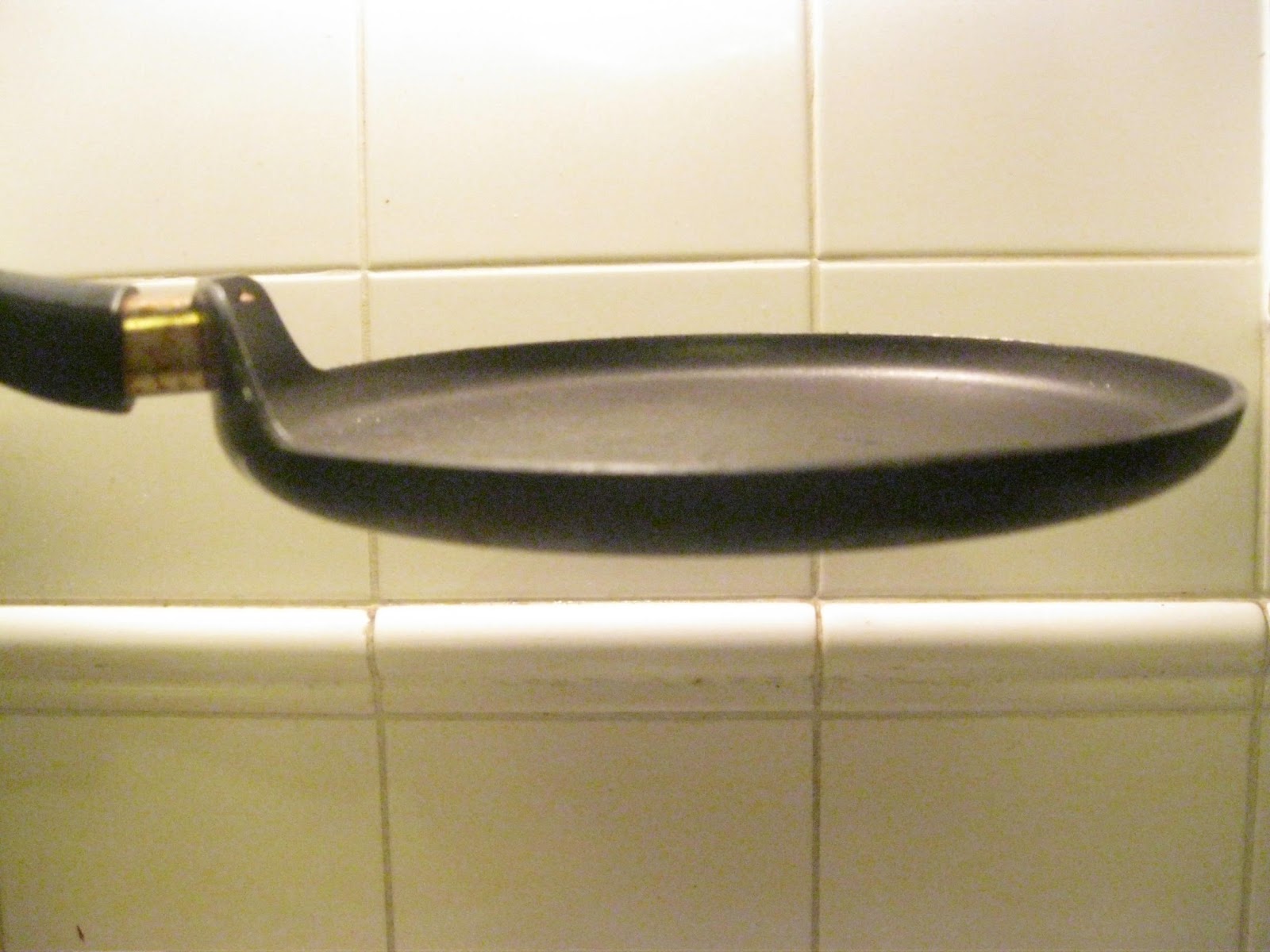
Heat a crêpe pan (basically a normal pan with a thick base and low sides) until it starts steaming.
Turn the pan down to medium heat, and melt butter in the pan, swirling it around.
Pour in some of the mixture and leave until the edges curl and you can see steam. As long as you tilt the pan whilst pouring the mixture in, you will have a thin and evenly spread crêpe.
Flip the crêpe and leave until it turns golden.
As soon as it is ready, take off the heat, put in the filling and roll.

Notes/variations
I used salted butter as brings out the flavour of the crêpe.
Putting sugar in the butter before putting the crêpe mixture in it will give the crêpe a caramelised taste.
When all the crêpes have been made, you could roll them up, put them in a lined baking tray, cover with custard and bake until the custard sets- a bit like a bread and butter pudding.
Alternatively, you could make Cpes Suzette.


Monday, 15 October 2012

Rosemary Apple Charlotte and Milk ice-cream

4 small apples (washed and peeled -with the skins set aside for later- and diced)
dark brown sugar, or muscavado sugar (for a toffee, nutty taste)
100ml double cream
400ml milk (goat's milk or hazlenut milk would also work really well)
3 egg yolks (you could use the egg whites for a meringue or accompanying apple souflées
a few sprigs of rosemary
2 well-toasted (BURNT) pieces of toast.
a few speculos (speculos are french biscuits which you'd normally have with your coffee- they have a toffee-like sweetness yet the texture of a biscotti meets digestive)

Preheat the oven to 160C.
In a saucepan, add the diced apples, the rosemary, and a splash of water (or calvados if you want alcohol). Keep on a low heat and leave to soften.
In another pan, heat the milk until it begins to boil, then turn the heat down and add the sugar (stirring continuously). Then whisk in the egg yolks, constantly so you don't get scrambled egg. When it is all combined, add the cream and thoroughly stir. Pour the custard into the ice-cream maker (or into a covered tub and put in the freezer).
The apple should be softened by now, so take the rosemary out and add the speculos. Mush it a bit to get a thick consitency, but not too much as it's nice to have the odd lump. Pour the apple mixture into the ice-cream maker, or generously drizzle into your tub to achieve a ripple effect.
On a lightly oiled baking tray, put on the apple skin and leave in the oven until the moisture has started to evaporate. Then, turn the grill on to maximum, and keeping an eye on them (like I should have done better) wait for them to harden and crisp up a bit. It should take a minute at maximum. When they are perfectly coiffed, gently pat them dry with a piece of kitchen towel to get rid of excess grease.
In the toaster put in two slices of toast, and when they are reasonably charred, take them out and generously slice them so you get reasonable diamonds/slithers/any other pretty shape .
The custard should have solidified quite a bit by now, so add the toast to it, and then leave it in the freezer to set.

Serve with the apple crisps and perhaps a dark-chocolate sauce.